A Practical Guide to Latex Mattresses: Comfort, Support, and Longevity
An essay-length exploration of latex mattresses that threads sleep science, material nuance, and the art of choosing a bed that grows with you. From the resilience of natural latex to the quiet of synthetic blends, this guide tracks the signals that tell you when a mattress is truly well-made—and when it is merely well-marketed.
In the realm of sleep, latex has long held a paradox: it promises both buoyant response and lasting support, yet it remains stubbornly misunderstood by many shoppers who mistake firmness for durability. The latex conversation spans centuries and continents, weaving through the laboratories of material science, the craft workshops of European bedding brands, and the everyday bedrooms of families who need reliable rest more than fancy packaging. This article looks beyond slogans to map the terrain: natural, synthetic, and blended latex, how density and feel translate to real-world comfort, and how to navigate care and longevity without compromising comfort or the health of the planet.
Three Profiles, Three Timeframes: The Personalities of Sleep
To anchor the discussion, consider three voices from distinctly different eras who, in their own way, contributed to our understanding of rest, materials, and the practicalities of choosing a bed. These voices illuminate why latex remains relevant today, and how you might listen for their echoes when selecting your next mattress.
-
Hypatia of Alexandria (c. 370–415 CE): A thinker who insisted on rigor and inquiry, her approach reminds us to scrutinize the assumptions behind comfort. When evaluating latex, we should ask about source materials, processing ethics, and long-term properties rather than trusting surface claims. Hypatia’s legacy urges readers to demand evidence: density tests, durability data, and transparent sourcing.
-
Marie-Catherine Boulanger (late 19th–early 20th century): A craftsman-turned-scientist who bridged artisanal bedding with emerging industrial methods. Her mindset champions a careful balance between hand-curated comfort and scalable production. In the latex conversation, that translates into valuing brands that harmonize ethical sourcing with consistent performance across thousands of units.
-
John Henry Patterson (mid-20th century): A bedding innovator who pushed models of durable, comfortable foam and latex layering. His era taught us that longevity is a function of design: a mattress pad’s containment, a cover’s breathability, and the interplay of layers that ensure you sleep through the night, not just at the moment of purchase.
Each of these figures helps frame the practical questions we should ask when weighing latex options today: Is the latex natural or synthetic? What is the density, and how does it translate to support across different sleeping positions? How does the layer interact with moisture, temperature, and durability over a lifetime of use?
Latex Mattress 101: The Three Fundamental Varieties
Latex mattresses come in three broad categories, each with its own advantages, trade-offs, and care considerations. Understanding these differences helps pair you with a mattress that aligns with your sleep style, budget, and environmental values.
Natural Latex
Natural latex is derived from the sap of rubber trees, typically processed with minimal additives. It offers buoyant response, robust durability, and a distinctive “springy” feel that can support various sleeping positions without the sink-in of some memory foams. The material is inherently breathable, especially when manufactured into aerated or pin-core/blended forms that encourage airflow. For eco-conscious consumers, natural latex is often the preferred path, especially when certified by bodies such as GOTS or OEKO-TEX alongside FSC-certified woods for the bed’s frame and supporting components.
Synthetic Latex
Synthetic latex is produced from petrochemical feedstocks and can mimic many of natural latex’s properties, sometimes at a lower cost. While it can deliver good durability and a consistent feel, it may not have the same ecological footprint as natural latex. Some sleepers find synthetic latex to be a touch firmer or more uniform in density, which can suit certain firmness preferences or allergy considerations. When evaluating synthetic options, inspect the formulation details and any scent or off-gassing data as a matter of personal sensitivity.
Blended Latex
Blends mix natural and synthetic latex to balance feel, durability, and cost. The resulting feel can vary widely depending on the blend ratio, the presence of other foams, and the design of the encasing materials. If you’re drawn to a blended latex model, pay attention to the brand’s disclosure about the exact composition, the core density, and how the layers are arranged — all of which influence how the mattress responds to movement, supports the spine, and breathes over the course of a night.
Firmness, Density, and What They Mean for You
A mattress’s feel is the result of layers and density. Latex density is typically expressed in pounds per cubic foot (PCF). Higher density generally correlates with greater durability and a firmer feel, while lower density yields more plushness and quicker contouring. But the story isn’t that simple. A latex mattress can balance buoyant support with a responsive cradle, giving relief to pressure points without the sensation of sinking. The nuance lies in how the density interacts with your body weight, sleeping position, and temperature regulation.
For back sleepers and those who carry more weight, a medium-firm to firm natural latex core can provide spinal alignment without sacrificing support. Side sleepers may prefer a slightly softer latex that cushions the shoulders and hips while maintaining overall support. It’s a reminder that “firm” is not a universal category; it’s a personal line drawn by your sleeping biomechanics.
One practical approach is to test firmness at home with a simple, temporary setup before committing to a full purchase. If a brand offers a trial period, use it to gauge how the mattress feels across a full night. If at home trials aren’t available, examine the density ratings and consider how the feel translates when you lie in your typical position for a while — do you feel supported without tension in the lumbar region? Do you awaken with a comfortable neck and shoulder alignment?
Care, Longevity, and the Arcadia Comfort Sleeper Mattress Pad
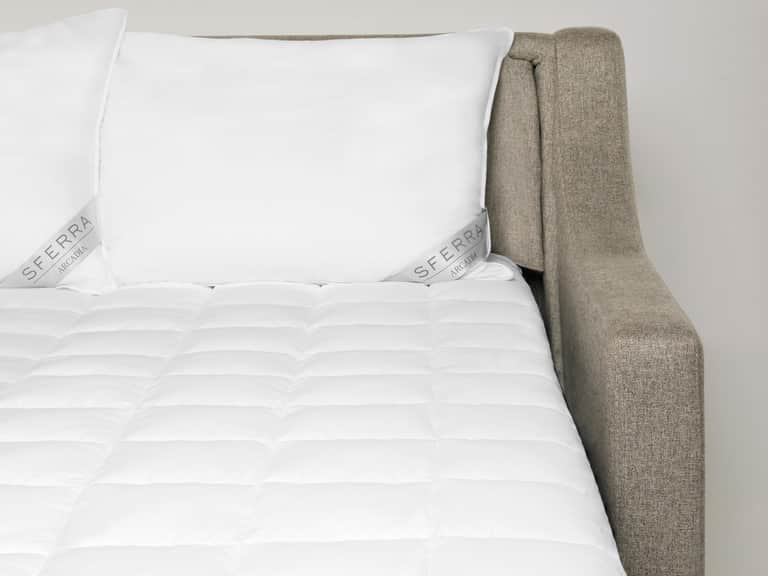
Durability in the latex ecosystem is not only about the latex itself but also about how you protect and support it. A well-made mattress pad can extend the life of your latex core by mitigating wear and regulating moisture. In practical terms, the Arcadia Comfort Sleeper Mattress Pad, a product in a recent bedding lineup, offers a compelling blend of down-alternative fill, breathability, and a secure six-inch box construction to prevent fill migration. The pad’s 330-thread-count cotton sateen shell provides a smooth, cool sleeping surface while the elasticized sides ensure a snug fit over a wide range of mattress depths. For readers who share a bed with children or pets, this pad can be a crucial ally in keeping the latex mattress clean, comfortable, and long-lasting.
Arcadia Comfort Sleeper Mattress Pad
330TC cotton sateen shell · pluma-fil down alternative · 6" box construction
Product Highlight
$203.00
When selecting a latex mattress, pairing it with a capable foundation and protective layer is part of the equation. Consider a breathable, moisture-wicking cover and a protective pad that fits securely. The Arcadia option showcases a design philosophy that celebrates comfort and practicality without sacrificing the core properties of latex: resilience, airflow, and long-lasting support.
Care tips to maximize longevity include rotating the mattress periodically (if allowed by the design), ensuring a supportive foundation, and using removable, washable covers to prevent surface soiling from accumulating in the latex core. Latex itself is resilient and resistant to many wear patterns, but it benefits from a climate-controlled environment and a bed base that minimizes moisture buildup.
Brand, Ethics, and the Sustainable Sleep Agenda
In today’s market, the ethical footprint of sleep products matters as much as their comfort. Latex sourcing and processing have become touchpoints for sustainability conversations, with brands increasingly seeking certifications and transparent supply chains. Certifications such as GOTS, OEKO-TEX, and other third-party validations provide a reliable compass for consumers who want to align their purchases with ethical practices. The conversation about latex is, in fact, a broader conversation about how we sleep—what materials touch our skin, what chemicals we inhale at night, and how our choices echo beyond the bedroom into the larger ecosystem.
As you navigate options, consider: Where does the latex come from? How is it processed? Does the brand share details about the sourcing of the rubber trees and the workers who tend them? What is the environmental footprint of the entire mattress ecosystem, from the core to the cover to the packaging? These questions are not merely about corporate virtue; they are about the integrity of the product you will spend years sleeping on. The best latex mattresses combine comfort with a clear, responsible approach to materials, manufacturing, and aftercare.
A Thoughtful Buying Window: How to Test and Decide
Test the mattress in stages. Begin with a theoretical watchlist: the core latex composition, density (in PCF), the layering structure, and the cover material. If possible, perform a hands-on test, lying on the mattress in your typical positions for 15–20 minutes. Pay attention to how your hips and shoulders align with your spine and whether you feel any persistent pressure points. Then move to a longer trial period if offered. A generous trial gives your body time to adjust and reveal whether the mattress earns its keep across nights and seasons.
For those seeking an explicit example, consider products like the Arcadia Comfort Sleeper Mattress Pad as a protective layer that complements latex’s resilience. It’s not a replacement for an appropriate latex core, but it demonstrates how layering choices can influence temperature regulation, surface softness, and overall sleep quality. The key is balance: you want a mattress that breathes, doesn’t trap heat, and maintains the integrity of the latex core for years to come.
Three Timeframes, Three Tones: The Technique of Longevity
From Hypatia’s insistence on evidence to Marie-Catherine Boulanger’s marriage of craft and science and John Henry Patterson’s practical durability concepts, a consistent thread runs through the modern latex conversation: explainability, durability, and care. The modern consumer deserves bedding that speaks to these values: transparent materials, robust design, and a maintenance plan that respects both the sleeper and the planet.
In practice, this means reading product labels with a critical eye, seeking third-party certifications, and prioritizing designs that promise airflow, resilience, and measurable longevity. It also means embracing a nuanced view of density and feel rather than chasing a single, fixed definition of firmness. A latex mattress can deliver a satisfying blend of cradling contour and buoyant support, but only when the layers are thoughtfully engineered and the materials chosen respect the long arc of a life lived in sleep.
Conclusion: The Quiet Confidence of a Well-Chosen Latex Mattress
Latex mattresses embody a paradox resolved by design: they offer a springy, responsive surface without sacrificing support and durability. They are products of careful science and patient craft, built to cradle the body without constraining the breath. The best latex mattresses honor the sleeper by delivering temperature regulation, motion isolation appropriate to the user’s preference, and a lifespan that justifies the investment.
In the end, the question is less about whether latex is superior to other foams and more about whether a bed, built with honesty and care, will carry you through the hours you return to it night after night. The three voices of age—Hypatia, Boulanger, and Patterson—remind us that the best bedding choices emerge from a blend of rigorous inquiry, craft, and practical durability. The Arcadia Comfort Sleeper Mattress Pad, among other well-made products, serves as a model of how layering and protection can extend the life of a latex core, ensuring that your rest remains a reliable sanctuary rather than a temporary comfort.
If you’re navigating this landscape, here is a short recap: identify whether you want natural, synthetic, or blended latex; confirm density and layering; seek independent certifications; consider a tested trial period; and pair your latex core with breathable, easy-care coverings and protective pads. The journey to a better night’s sleep begins with curiosity, extends through careful testing, and ends in a bed that respects your body and the world you inhabit.